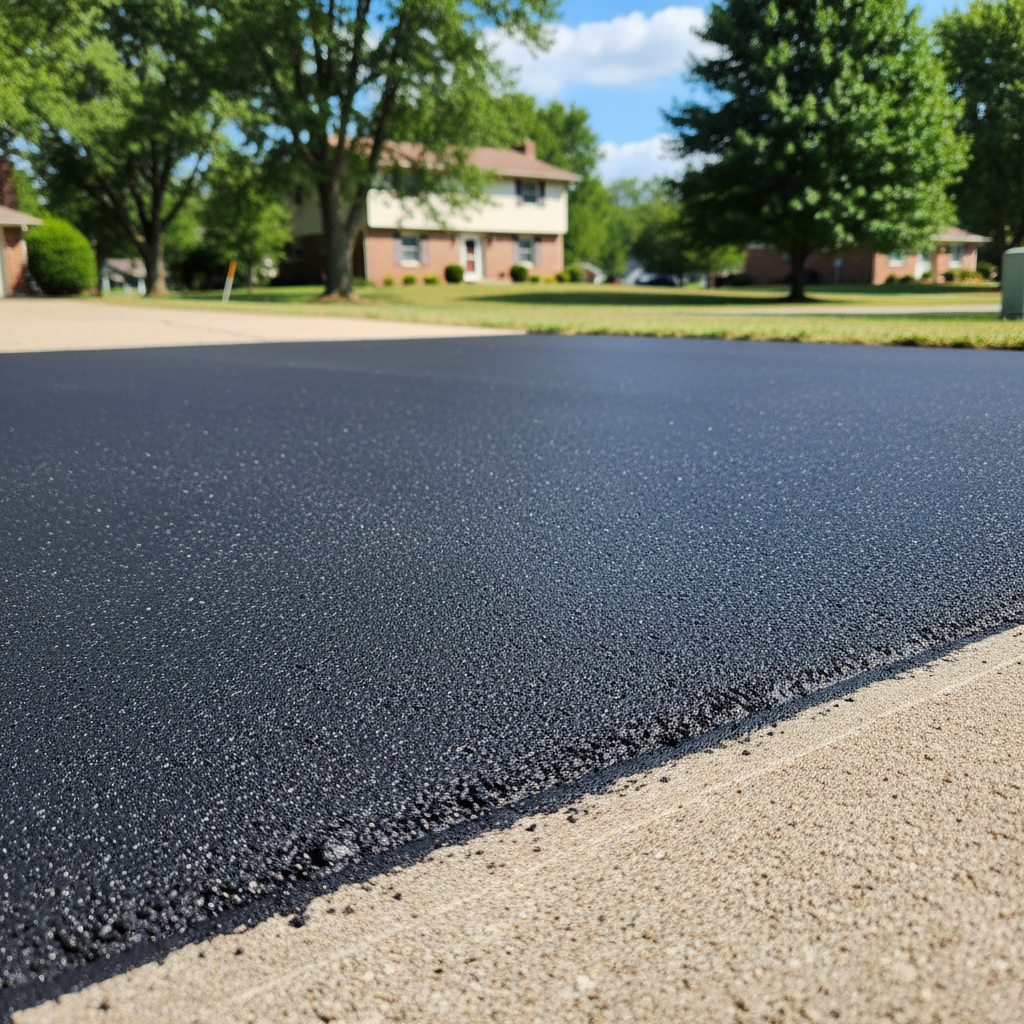
What exactly is slurry coating and how's it different from sealcoating?
Alright, let's clear this up right off the bat, because I hear this confusion a lot. A lot of folks use 'slurry seal' and 'sealcoat' interchangeably, but they're not the same thing. Not even close, really. Think of sealcoating as a thin, protective paint job for your asphalt. It's mostly an emulsion of asphalt, water, and some fillers. It protects against UV rays and water, and it makes your driveway look nice and black again.
Slurry coating, on the other hand, is a whole different beast. It's a mix of asphalt emulsion, fine aggregates (like sand or crushed rock), water, and some chemical additives. The key difference? Those aggregates. Because it has those fine rocks, we apply it much thicker than a sealcoat — usually about a quarter to half an inch thick. It's not just a surface protector; it actually adds a new wearing course to your pavement. It fills in minor cracks and surface imperfections, improves skid resistance, and extends the life of your asphalt by adding structural integrity to the surface. It's a more robust solution, plain and simple.
When is slurry coating the right choice for my driveway?
You're probably wondering if this is the right move for your place. Slurry coating works best for asphalt driveways that are showing signs of aging but aren't completely falling apart. I'm talking about surfaces with minor to moderate cracking, some raveling (that's where the aggregate starts coming loose), and general surface wear. If your driveway is starting to look faded, a bit rough, and has a lot of those tiny hairline cracks, a slurry coat can really bring it back to life and prevent bigger problems down the road.
It's a great option for extending the life of an existing asphalt surface that's still structurally sound underneath. If you've got major potholes, deep alligator cracking, or sections that are sinking, you're probably looking at repairs or even a full overlay before a slurry coat makes sense. Slurry coating isn't a miracle cure for a completely failed driveway; it's a preventative and restorative measure for asphalt that's still got some life in it.
How long does a slurry coat last in our Missouri weather?
This is a big one, especially with the crazy weather we get here in Columbia. You know how it is – scorching summers, freezing winters, and those spring thaws that really do a number on pavement. A properly applied slurry coat, using quality materials, can typically last anywhere from 5 to 10 years. Now, that's a pretty wide range, right? The exact lifespan depends on a few things: the quality of the initial application, the condition of your driveway before we start, and, yeah, that Missouri weather.
Heavy traffic, constant exposure to direct sunlight, and those brutal freeze-thaw cycles we get every winter can shorten its life. If your driveway is in a shaded area or doesn't get a lot of heavy vehicles, you'll likely see it last closer to that 10-year mark. But honestly, even with our unpredictable climate, a good slurry coat is a solid investment for years of protection.
Can I slurry coat over an old, cracked sealcoat?
This is a common question, and the short answer is: sometimes, but it depends. If your old sealcoat is mostly intact with just some fading, a slurry coat can usually go right over it. The slurry will bond to the existing sealcoat and provide that new, thicker wearing surface. However, if your old sealcoat is peeling, flaking, or severely cracked, we've got a problem. Applying a slurry coat over a failing sealcoat is like putting a fresh coat of paint on a rusty car without sanding it first – it's just going to fail prematurely.
In those cases, we'd need to remove the failing sealcoat first, or at least address the loose areas, to ensure proper adhesion of the slurry. We always do a thorough inspection of your driveway to figure out the best approach. You want that slurry to stick, and it won't if the surface underneath isn't stable.
What's the typical process for applying a slurry coat?
The process is pretty straightforward, but it takes careful preparation and the right equipment. First, we clean the surface thoroughly. That means sweeping, blowing, and sometimes even power washing to get rid of all the dirt, debris, and loose material. Any oil spots or spills need to be treated too, because slurry won't stick to oil. Then, we'll address any larger cracks or minor potholes. Slurry can fill small cracks, but anything significant needs to be filled beforehand to ensure a smooth, even surface.
Once the surface is prepped and dry, we apply the slurry mix. We use specialized equipment that continuously mixes the materials and spreads it evenly across the driveway. It's usually applied in one or two layers, depending on the desired thickness and the condition of the existing pavement. We spread the mixture with a squeegee or a specialized spreader box to ensure a consistent thickness. After application, it needs time to cure. This usually means keeping traffic off it for at least 24 to 48 hours, sometimes longer depending on humidity and temperature. It's a bit of a wait, but it's crucial for the coat to harden properly.
Will slurry coating fix my driveway's drainage problems?
No, not really. This is a common misconception. Slurry coating is a surface treatment. It's designed to protect and restore the top layer of your asphalt, improve its appearance, and fill minor surface imperfections. It's not going to change the underlying grade or slope of your driveway. If you have standing water issues after a rain, or water pooling near your garage, those are drainage problems that need to be addressed at a deeper level. We're talking about regrading, installing drains, or potentially rebuilding sections of your driveway to correct the pitch.
A slurry coat might make the surface a bit more impermeable, which could slightly reduce water penetration into the base, but it won't magically redirect water flow. If you've got drainage concerns, you need to bring those up during the initial assessment. We can help you figure out if it's a simple fix or something more involved, but don't expect a slurry coat from Apex Asphalt Solutions to solve a major drainage issue.
How much does slurry coating cost compared to sealcoating or repaving?
Alright, let's talk numbers, because that's always a big factor. Slurry coating is definitely more expensive than a standard sealcoat application, but it's significantly less expensive than a full repave or even an asphalt overlay. Think of it as being in the middle ground. A sealcoat is the cheapest option, offering basic protection and aesthetic improvement for a few years. A slurry coat costs more because of the additional materials (the aggregates) and the specialized application process, but it gives you a much thicker, more durable wearing surface that lasts longer.
When you compare it to a full repave, where we're tearing out your old driveway and laying down all new asphalt, slurry coating is a fraction of the cost. A repave is a major investment, often ten times or more the cost of a slurry coat. So, if your driveway is in that sweet spot – not completely shot, but needing more than just a quick seal – slurry coating offers excellent value. You're getting a substantial upgrade in durability and longevity without breaking the bank for a brand-new driveway.
What's the best time of year to get a slurry coat done in Columbia?
Just like with sealcoating or any asphalt work, timing is crucial here in mid-Missouri. We need specific conditions for the slurry to cure properly. The ideal time is when temperatures are consistently above 50°F (10°C) and rising, and when there's no rain in the forecast for at least 24-48 hours after application. That usually puts us in late spring, through the summer, and into early fall. We're talking May through October, generally.
Doing it too early in the spring when night temperatures are still dipping, or too late in the fall when it's getting cold and damp, can lead to improper curing. That means the slurry won't harden correctly, it'll be more susceptible to damage, and it won't last as long. We also need to avoid extreme heat, like those 100-degree days we sometimes get in July and August, because the slurry can dry too fast and crack. So, we're looking for that sweet spot of moderate temperatures and dry weather. It's all about giving the material the best chance to do its job and protect your investment.