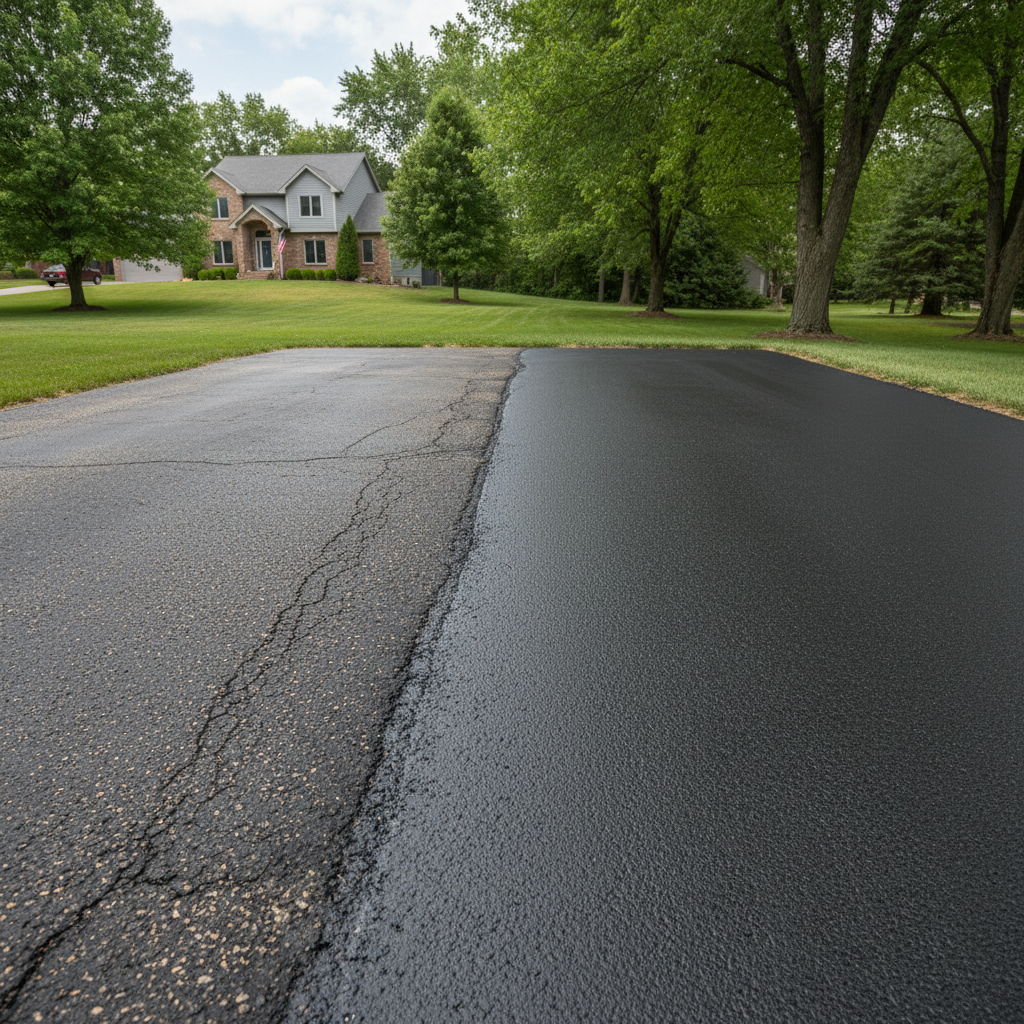
You're looking to protect your asphalt driveway, keep it looking good, and extend its life. Smart move. Here in Columbia, MO, with our crazy freeze-thaw cycles and hot summers, taking care of your asphalt isn't just about curb appeal; it's about preventing expensive repairs down the road. When folks talk about 'slurry coating' or 'sealcoating,' they're often thinking of a couple of different approaches. Let's break down the two main contenders: traditional asphalt emulsion sealers and the more robust slurry seal.
Asphalt Emulsion Sealers: The Common Choice
This is what most homeowners think of when they hear 'sealcoating.' It's a liquid asphalt product, usually mixed with water, mineral fillers, and some additives. It's designed to protect your asphalt from UV rays, water penetration, and oil spills. Think of it like sunscreen and a rain jacket for your driveway.
Cost
Generally, asphalt emulsion is the more budget-friendly option upfront. It's less material, and it's quicker to apply. For a typical residential driveway in a neighborhood like Old Southwest, you're looking at a lower initial investment compared to a slurry seal.
Durability & Maintenance
It does a decent job, but it's not a miracle worker. You'll typically need to reapply asphalt emulsion every 2-3 years, sometimes even sooner if your driveway gets heavy traffic or is exposed to a lot of sun. It's a thinner coating, so it doesn't add much structural strength. It's mostly a surface protector. It'll fill tiny hairline cracks, but anything more significant needs to be patched first.
Appearance
When it's first applied, it gives your driveway that deep, rich black look everyone loves. It really spruces things up. Over time, it will fade and wear, especially in high-traffic areas or where tires scuff it constantly.
Slurry Seal: The Heavy-Duty Option
Now, slurry seal is a different beast. It's a mixture of emulsified asphalt, finely graded aggregates (like sand or crushed rock), water, and mineral fillers. The key difference here is those aggregates. They give it more body, more substance, and more durability.
Cost
You're going to pay more for a slurry seal, no doubt about it. The materials are more expensive, and the application process is a bit more involved. It's a thicker application, often requiring specialized equipment. However, don't just look at the sticker price; think about the long game.
Durability & Maintenance
This is where slurry seal really shines. Because it contains aggregates, it's much more resistant to wear and tear. It provides a new wearing surface for your asphalt. It's excellent for filling minor cracks and evening out slight surface imperfections. You can expect a slurry seal to last anywhere from 5-10 years, sometimes even longer, depending on traffic and conditions. That means less frequent applications, which can actually save you money over the long term. It holds up much better to the constant abuse our Columbia weather throws at it, from those scorching July days to the icy January mornings.
Appearance
A slurry seal also gives you that beautiful, dark black finish. Because it has aggregates, it provides a slightly coarser texture than a smooth emulsion sealer. This texture can actually be a benefit, offering better traction, especially when wet. It also tends to hold its color and integrity longer than a simple emulsion.
Which One Should You Choose?
Here's my honest take. For most homeowners in Columbia, MO, with a typical residential driveway that's in decent shape, a slurry seal is almost always the better investment. Yes, the initial cost is higher, but the durability and extended lifespan mean you're doing it less often. You're getting a more robust protective layer that can handle our local conditions better.
If your driveway is relatively new and you're just looking for basic protection and a quick cosmetic refresh, an asphalt emulsion might be acceptable. But if your driveway is a few years old, has some minor surface wear, or you just want the best protection and longest lasting results, go with the slurry seal. It's a more substantial treatment that actually adds a new layer of pavement, not just a coating.
Think of it this way: asphalt emulsion is like painting a wall; slurry seal is like skim coating it first, then painting. You get a smoother, more durable finish that lasts. We've seen countless driveways around here, from the older homes in the West Ash area to the newer builds out by Grindstone, and the ones that get a proper slurry seal just hold up better over time.
No matter which route you choose, proper preparation is key. Any cracks need to be filled, and the surface needs to be clean. Don't skimp on that step, or you're just throwing money away. If you're unsure what your driveway needs, or you want to talk through the options for your specific situation, give us a call at Apex Asphalt Solutions. We're happy to come take a look and give you an honest assessment.